

 + than 5000 subscribers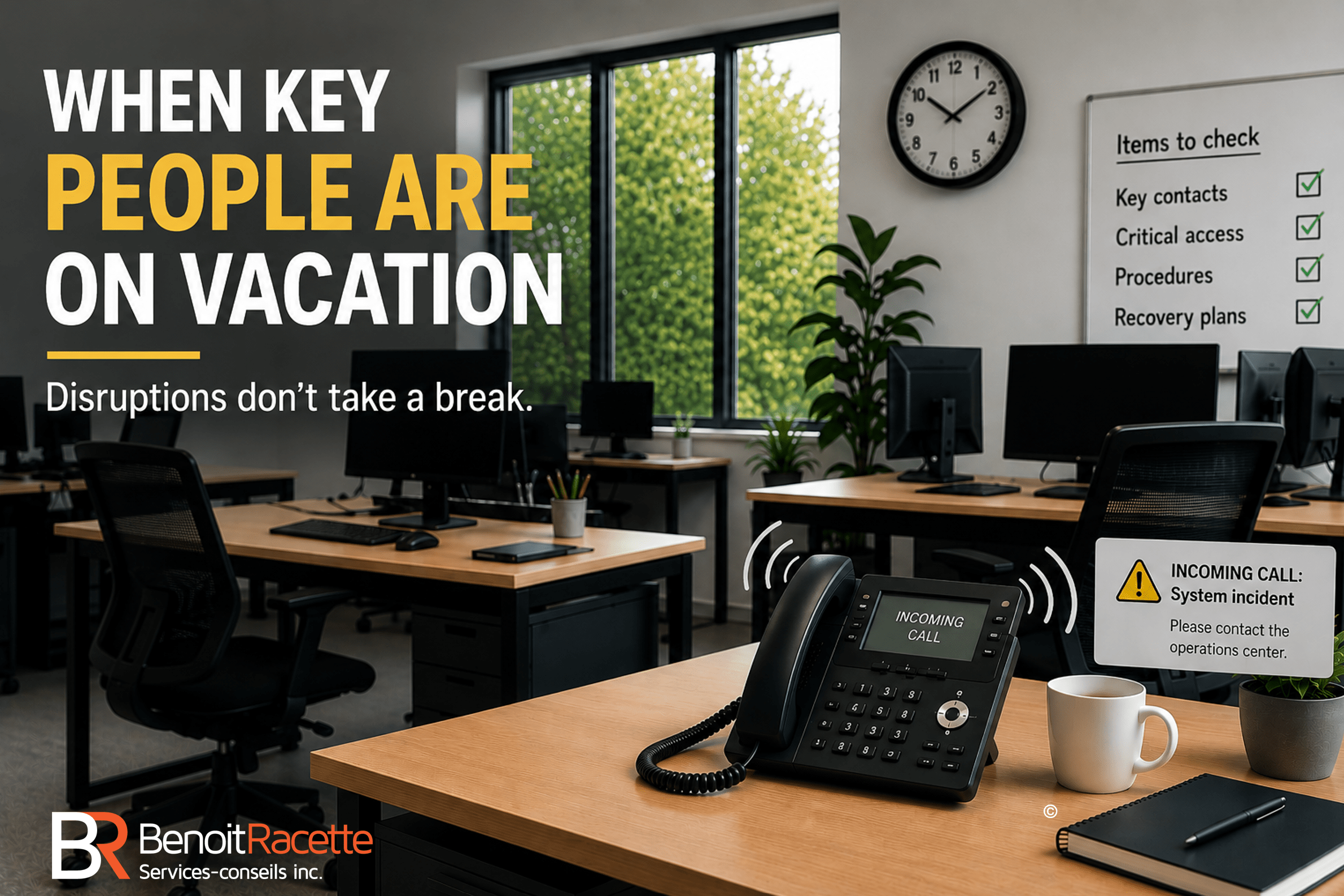
Summer is often associated with vacations, slower business activity, and partially occupied offices. For many organizations, this period is also perceived as quieter and less risky. Experience, however, demonstrates the opposite.
Major Disruptions Don’t Take a Vacation
Incidents do not take vacations. An IT outage, a supplier issue, a cybersecurity incident, or an emergency situation can occur at any time. When they happen in the middle of summer, a particular vulnerability often becomes apparent: the absence of the people who possess the knowledge essential to the organization’s operations.
In many organizations, critical information still relies heavily on a small number of individuals. These are the people who understand specific procedures, maintain key contacts, know workarounds, and understand the nuances of certain systems. As long as they are available, this dependency often goes unnoticed. The problem arises when they are not.
Consequences of Such a Situation
If a disruption occurs while a key individual is on vacation, the organization may quickly face delays, difficult decisions, or avoidable mistakes. In some cases, business recovery depends more on the availability of one person than on the quality of the plans that are in place.
How can you tell if your organization is exposed to this risk?
Here are three revealing indicators:
- Only one person truly understands certain essential tasks or critical business processes;
- Critical contact information, system access details, or procedures are undocumented or difficult to locate;
- Designated backups have never had the opportunity to perform their responsibilities.
Simple Measures to Reduce This Vulnerability
Before leaving for vacation, ensure that essential information is properly documented and accessible. Also verify that the required access rights are available to those who may need to intervene in your absence.
It is equally important to confirm who will assume critical responsibilities during the summer period. A designated backup should understand their responsibilities and know where to find the information needed should an issue arise.
A Quick Validation Exercise
To assess your level of preparedness, ask a simple question to the person designated as your backup:
“If a major incident occurred tomorrow morning while I am on vacation, would you know what to do, who to contact, and where to find the information you need?”
If the answer is hesitant or incomplete, there is a good chance that some critical knowledge still depends on a single individual.
A brief 30-minute discussion with key backups can often identify gaps in documentation, access rights, or understanding of responsibilities. It is far better to discover these weaknesses now than during an actual disruption.
Conclusion
Organizational resilience is not based solely on plans and procedures. It also depends on an organization’s ability to operate when certain individuals are unavailable. Summer therefore provides an excellent opportunity to determine whether critical knowledge is truly shared across the organization—or whether that knowledge is taking a vacation as well.
Strategic Support to Strengthen Your Resilience
At Benoit Racette Services-conseils inc., we help organizations protect their critical operations, ensure the safety of their teams, and maintain the trust of their clients—even when a major disruption occurs.
With nearly 30 years of specialized experience in business continuity, crisis management, emergency preparedness, and IT disaster recovery planning, Benoit Racette supports organizations with rigor and confidentiality, transforming complex challenges into concrete solutions tailored to their reality.
- Resilience diagnostic
- Updated business continuity plan
- Operational crisis management plan
- Realistic IT disaster recovery plan
- Tests and exercises to validate plans and strengthen teams
- Targeted training in continuity, crisis management, and operational preparedness
These are the tools that distinguish organizations that suffer… from those that respond with control.
Want to assess your vulnerabilities, refine your plans, or better prepare your organization?
Contact us: [email protected]